


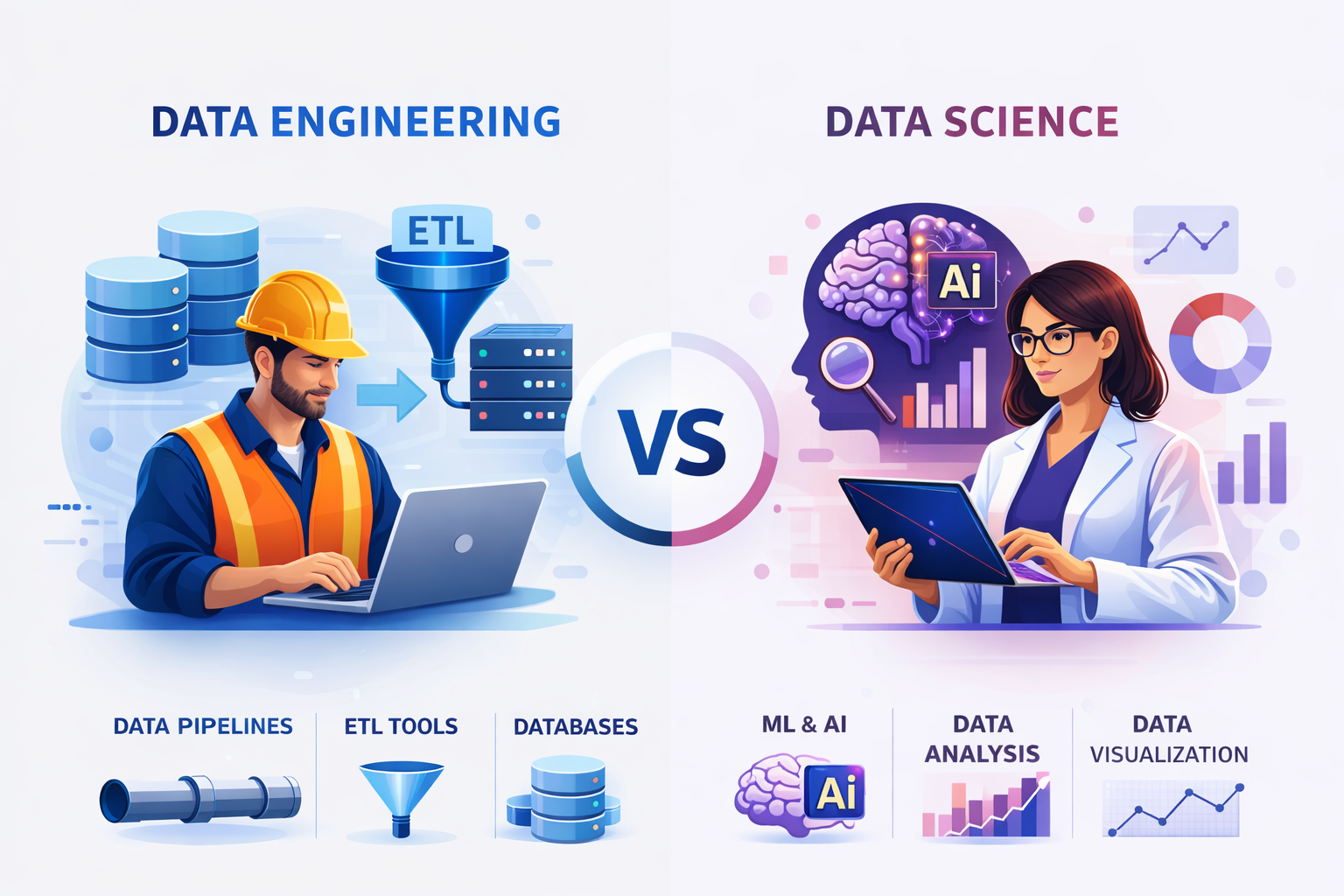
Data Engineering vs Data Science: Key Differences Explained
With data becoming the key driver for making better business decisions and developing innovative products, organizations are increasingly depending on it to gain a competitive edge. This phenomenon has led to the emergence of two indispensable job profiles: Data Engineering and Data Science. Even though both the roles are closely related, it is often difficult [ ]
Read More →
What Is an LLM and Why It’s the Future of Customer Experience?
Today’s customer experience is driven by speed, personalization, and seamless communication. However, traditional systems often struggle to meet these expectations, creating an opportunity for more advanced solutions. This is where Large Language Models (LLMs) come in—transforming the customer experience landscape with faster, more personalized, and more human-like interactions. In this blog, we will learn about [ ]
Read More →
AI in Manufacturing: Benefits, Use Cases, and Real-World Examples
Artificial intelligence is transforming factories worldwide by enabling smart systems that help improve production speed and product quality. These systems can study data, monitor machines, and help make better manufacturing decisions. AI in the manufacturing industry helps companies reduce machine stops, improve work speed, and make better choices using real-time data. With factories adopting Industry [ ]
Read More →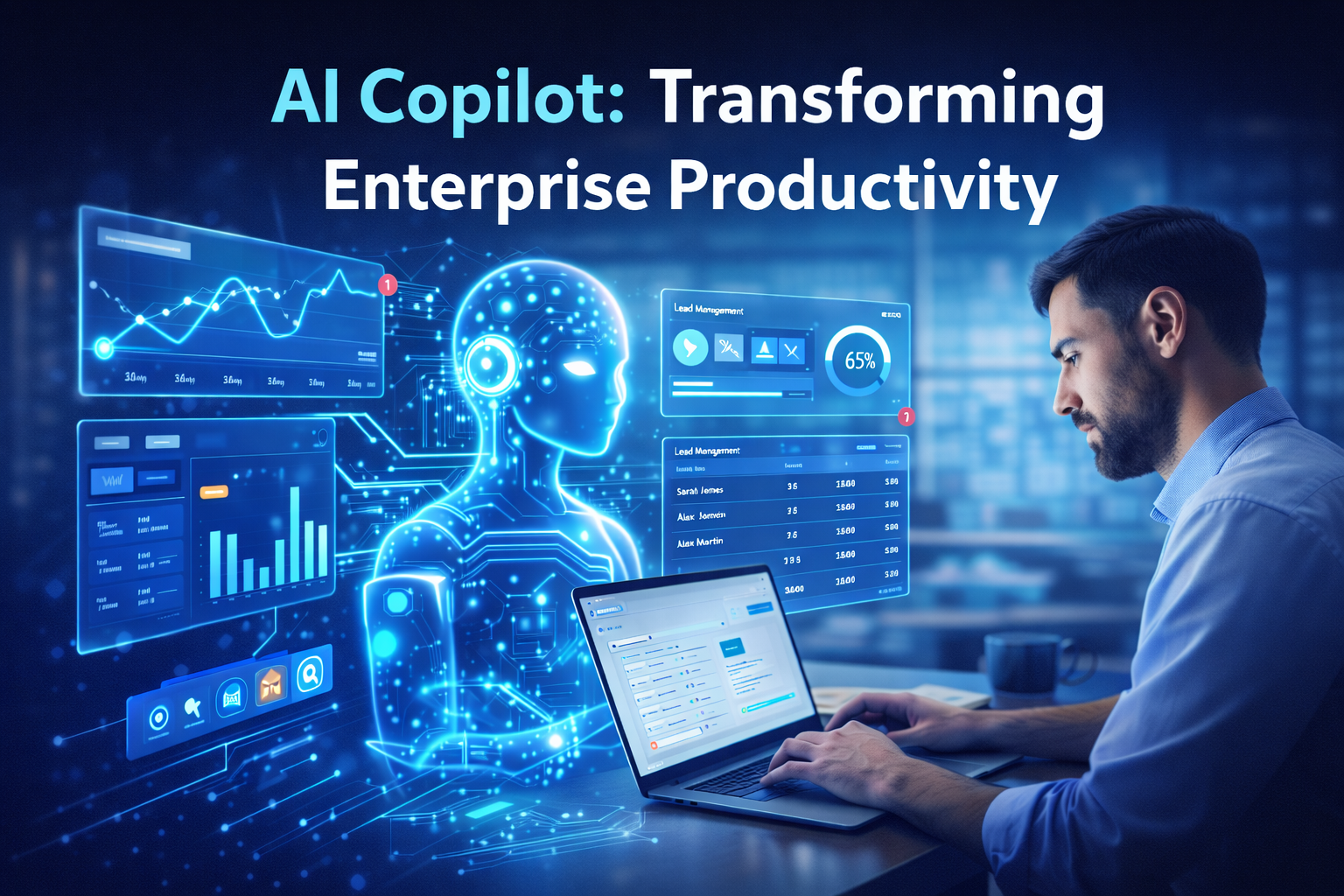
What Is an AI Copilot? Use Cases, Architecture & Enterprise Benefits
An AI copilot is an intelligent digital assistant that uses artificial intelligence to help users complete tasks faster, automate repetitive work, and generate insights while working inside business applications. It assists users by analyzing data, generating content, and providing contextual suggestions. Unlike traditional software, an AI copilot collaborates with users in real time. It analyzes [ ]
Read More →
State of AI Adoption: Insights from the AI Impact Summit 2026
Artificial Intelligence is no longer a distant innovation. Across industries, organizations are actively exploring how AI can improve operations, enable better decision-making, and unlock new business opportunities. To understand how organizations are progressing on this journey, we conducted a short survey with booth visitors at the AI Impact Summit 2026. The survey captured perspectives from 50 industry professionals, including [ ]
Read More →
What Is Generative AI and How Businesses Are Using It?
Generative AI is a branch of artificial intelligence that uses machine learning models to create new content such as text, images, code, audio, and video. It is widely used in business for automation, content generation, product development, and data analysis. It can create new content—like text, images, code, or even videos—by learning patterns from existing [ ]
Read More →
Machine Learning vs. Deep Learning: Key Differences Explained
Machine learning and deep learning are both subsets of artificial intelligence, but they differ in how they process data and learn patterns. Machine learning relies on structured data and manual feature engineering, while deep learning uses multi-layer neural networks to automatically learn from large volumes of unstructured data. Artificial intelligence has massively changed how different [ ]
Read More →
Generative AI in Retail: Boosting Customer Engagement Through Personalization
Artificial Intelligence (AI) has been transforming industries, and retail is no exception AI s advanced capabilities to process vast amounts of data, recognize patterns, and predict trends have played a major role in empowering retailers on how to improve their operations and enhance customer engagement. But, today beyond personalised shopping experience and supply chain optimization, AI [ ]
Read More →
Product Engineering vs Standard Product Development
Understanding the distinctions between product engineering and standard product development is crucial. Both methodologies play pivotal roles in bringing innovative products to market, yet they differ significantly in their approaches and outcomes. By exploring the nuances of these processes, businesses can make informed decisions to optimise their product development life cycle. Defining Product Engineering Product [ ]
Read More →
Why Technical Debt Hurts More in Cybersecurity Products
Introduction: The Hidden Risk in Your Stack Suppose you re leading a cybersecurity product company—chances are you re building under pressure: pressure to stay ahead of threats, innovate faster than incumbents, and now, keep up with AI-native startups entering the field at blistering speed. But here s the uncomfortable truth: most cybersecurity SMBs fight these battles while dragging [ ]
Read More →
Cybersecurity Trends 2025: What Every C-Suite Leader Needs to Know
At SapidBlue, we partner with visionary leadership teams to help them thrive in a rapidly changing digital landscape. In 2025, cybersecurity is no longer just an IT concern — it is a strategic business priority, deeply intertwined with operational resilience, stakeholder trust, and long-term growth. The threat landscape has expanded. Cybercriminals have evolved. And the [ ]
Read More →
New Product Development (NPD) Guide: From Concept to Launch Step-by-Step
New Product Development (NPD) is the complete process of bringing a new product to the market. It encompasses everything from the initial idea generation and concept development to design, production, and market introduction. New Product Development is a multifaceted process involving strategic planning, creative thinking, and meticulous execution, aimed at fulfilling market needs and ensuring [ ]
Read More →